
What Makes Greek Olive Oil Special
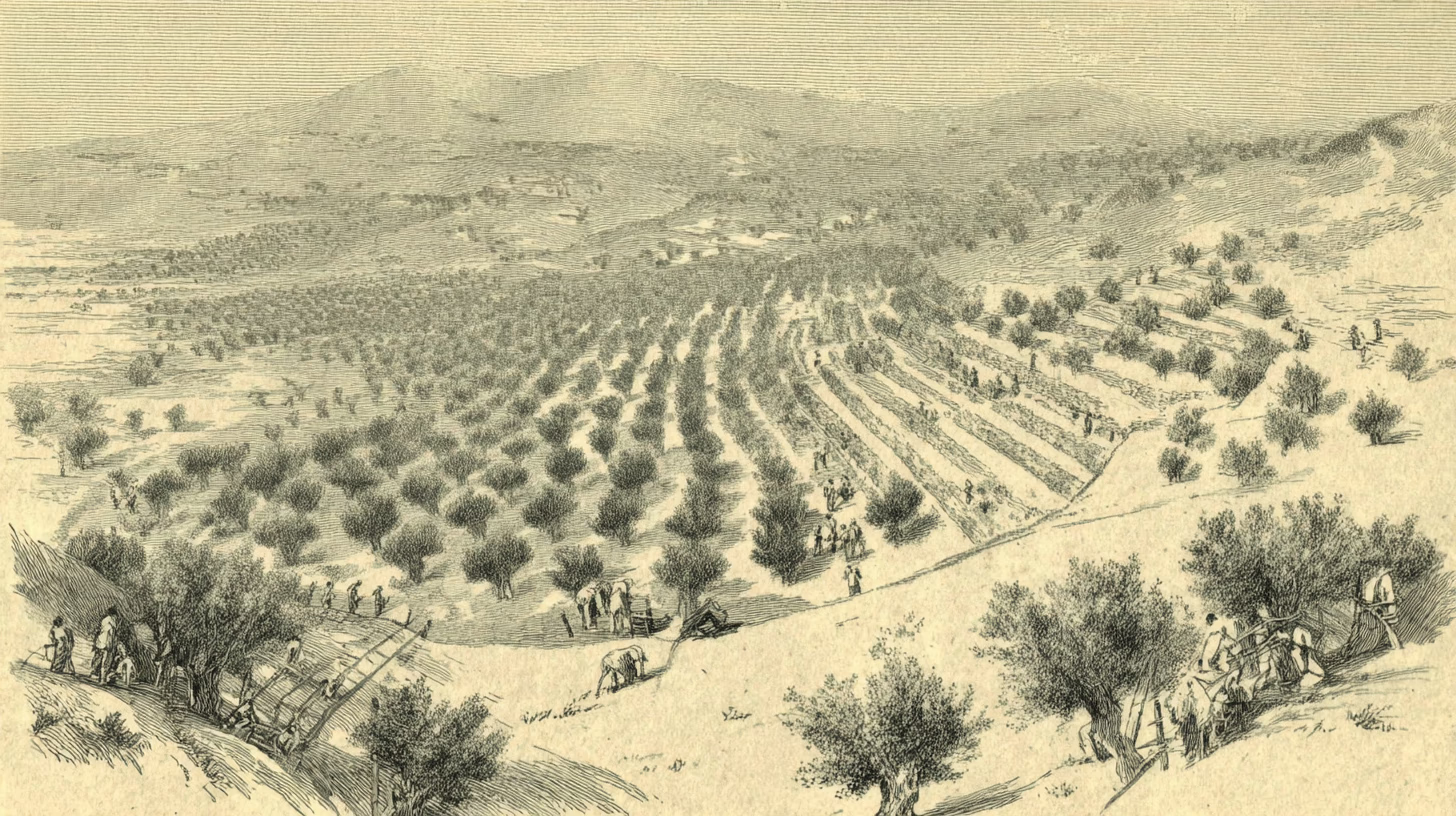
Greece is one of the world’s oldest and most respected olive oil producing nations. But what sets Greek olive oil apart from oils produced in Spain, Italy, or Tunisia?
A Climate Built for Olives
The Greek landscape — particularly the Peloponnese — offers a unique combination of rocky, mineral-rich soil, warm Mediterranean sun, and cool mountain winds. Olives that grow in these conditions develop slowly, concentrating their flavour and building higher levels of polyphenols — the natural antioxidants that give extra virgin olive oil its health benefits and peppery kick.
The Tradition of Hand-Harvesting
In many parts of Greece, the terrain is simply too steep and rugged for mechanical harvesting. This is especially true in the mountain groves near ancient Olympia, where Akratos olives are gathered. Hand-picking may be slower, but it protects the fruit from bruising, which means less oxidation and a cleaner, more vibrant oil.
Cold-Pressed, Not Just a Label
The term “cold-pressed” gets used loosely in the industry. For Akratos, it means the olives are pressed within hours of harvest, at temperatures that preserve the oil’s natural aroma and nutritional profile. No heat, no chemicals, no shortcuts.
Unfiltered by Choice
Most commercial olive oils are filtered to extend shelf life and create a uniform appearance. Akratos is deliberately left unfiltered — naturally cloudy — to preserve the micro-particles of olive fruit that carry flavour, texture, and character. It is olive oil as it was always meant to be.
Why It Matters for Your Table
When you choose a Greek extra virgin olive oil like Akratos, you are choosing an oil with genuine provenance, made by people who care about every step from grove to bottle. It is an ingredient that elevates everything it touches — from a simple salad to a finished dish.